What to Expect, How to Adjust, and When to Ask for Help
Getting a CPAP machine is an important step toward treating obstructive sleep apnea, but receiving the machine is only the beginning.
For many patients, the first few weeks involve an adjustment period. You may need time to become comfortable wearing a mask, learn how to use the equipment, and figure out how to manage issues such as air leaks, nasal congestion, or dry mouth.
The first 90 days are especially important because your sleep care team needs to determine whether your treatment is working, whether you are using the device consistently, and whether adjustments are needed.
At Athens Sleep and Wellness Center, we help patients understand what to expect after starting CPAP and provide ongoing CPAP management and support to help make treatment more comfortable and effective.
What Does CPAP Actually Do?
CPAP stands for continuous positive airway pressure.
The machine delivers a steady flow of air through a mask to help keep your airway open while you sleep. This prevents the repeated airway blockage that occurs with obstructive sleep apnea.
CPAP is one of the most common treatments for sleep apnea. (NHLBI, NIH)
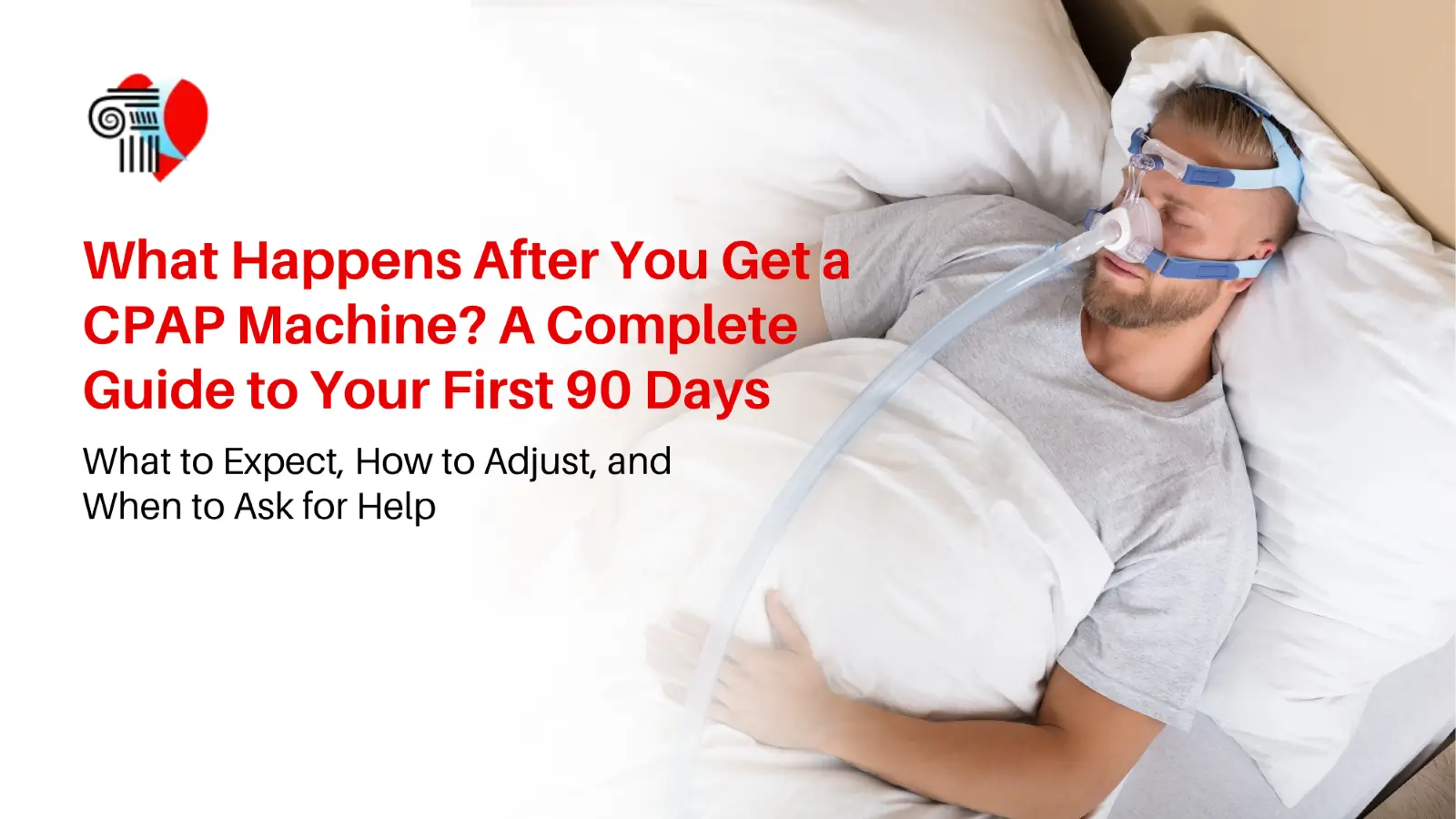
The machine generally includes:
- A motor that generates airflow
- A mask that fits over your nose or nose and mouth
- Tubing connecting the mask to the machine
- Optional humidification, depending on the device
Your provider determines the appropriate type of PAP therapy and settings based on your diagnostic results—whether derived from a home sleep study or an in-lab sleep study.
Your First Few Days: Getting Used to CPAP
The first few nights may feel strange.
You are suddenly sleeping with a mask on your face and breathing with assistance from a machine. It is normal for it to take some time to become comfortable.
Try not to judge your treatment based on the first night. Instead, focus on learning how the equipment feels and identifying anything that makes it difficult to use. (If you haven't received a formal diagnosis yet, review our guide on home sleep studies vs. in-lab sleep tests).
Your provider can help you find a mask that fits comfortably and address problems with pressure or equipment settings when necessary.
A Helpful Tip: If wearing the mask at night feels uncomfortable, NHLBI recommends wearing it for part of the day, such as while watching television, to become familiar with how it feels. (NHLBI, NIH)
Weeks 1–2: Focus on Comfort and Consistency
During the first couple of weeks, your primary goal is to establish a routine.
Ideally, use your CPAP whenever you sleep, including naps. NHLBI recommends using PAP therapy every time you sleep, including when traveling.
You may notice improvements relatively quickly, such as:
- Less daytime sleepiness
- Better sleep quality
- Less snoring
- Feeling more rested in the morning
However, not everyone notices an immediate difference. The important thing is to continue using the treatment consistently and communicate with your healthcare provider if you are having difficulty.
Common CPAP Problems During the First Month
CPAP can be highly effective, but getting comfortable with treatment sometimes requires adjustments.
Mask Leaks
If air is escaping around your mask, it may not fit correctly. A poor seal can make the treatment uncomfortable and may interfere with effective therapy. Your provider can help you determine whether you need to adjust the mask or try another style.
Dry Mouth or Nose
Dry mouth, nasal congestion, runny nose, and nosebleeds can occur with CPAP. Depending on the cause, your provider may recommend adjustments such as humidification or a different mask configuration. (NHLBI, NIH)
Skin Irritation
A mask that is too tight or does not fit properly can irritate your skin. Do not simply tighten the straps more if you notice discomfort. A different mask size or style may provide a better fit.
Feeling Claustrophobic
Some people initially feel uncomfortable having a mask over their nose or mouth. Gradual daytime practice can help you become more familiar with the sensation. If claustrophobia continues to interfere with treatment, talk with our sleep care team rather than abandoning CPAP.
Difficulty Falling Asleep
It may take time to get used to sleeping with the equipment. Your provider may be able to make adjustments to the mask, pressure settings, or other aspects of your therapy to make the experience more comfortable. (NHLBI, NIH)
Why You Should Not Ignore CPAP Problems
One of the biggest mistakes patients can make is stopping treatment because the first few nights are uncomfortable. Instead, tell your sleep specialist what is happening. There may be a relatively simple solution.
For example, your provider may recommend:
- A different mask
- Mask adjustments
- Humidification
- Changes to pressure settings
- Different PAP equipment
- Additional evaluation if symptoms continue
Close follow-up and troubleshooting are important parts of successful PAP treatment. (AASM)
Weeks 3–4: Look at More Than How You Feel
By this point, you should have a better understanding of how CPAP fits into your nightly routine.
Your care team may also review information from your machine. Modern PAP devices can provide information about usage and whether treatment is effectively reducing breathing disturbances. Your healthcare provider may use this information to determine whether adjustments are necessary. (NHLBI, NIH)
This is important because feeling better is only part of the picture. Your provider also wants to know whether the therapy is being used consistently and whether it is adequately treating your sleep apnea.
Month 2: Fine-Tuning Your Treatment
By the second month, many patients are becoming more comfortable with CPAP. But this is also a good time to address any problems that have not resolved.
Ask yourself:
- Am I using CPAP every time I sleep?
- Is my mask comfortable?
- Am I experiencing significant air leaks?
- Am I waking up because of the equipment?
- Am I still excessively sleepy during the day?
- Am I experiencing congestion or dry mouth?
- Do I feel that my sleep has improved?
If something is not working, tell your sleep specialist. You do not have to simply tolerate an uncomfortable treatment.
Month 3: Your Follow Up Evaluation
The first 90 days are an important period for evaluating your response to PAP therapy. Your healthcare provider may review your symptoms, treatment experience, and objective device data to determine whether therapy is providing benefit.
For some patients, insurance requirements also make this period particularly important. For example, Medicare coverage rules for CPAP require practitioner reassessment and documentation of continued use and improvement of obstructive sleep apnea symptoms after the initial period of therapy. (Centers for Medicare & Medicaid Services)
Specific coverage requirements can vary by insurance plan, so patients should confirm their requirements with their healthcare provider and equipment supplier.
What If CPAP Isn't Working for You?
Not every problem means CPAP has failed. Sometimes the issue is simply that the treatment needs to be adjusted. For patients who struggle significantly with compliance, providers may also evaluate alternative sleep apnea treatment options.
Your provider may consider:
- A different mask
- Pressure adjustments
- A different PAP mode
- Humidification
- Treatment of nasal symptoms
- Additional diagnostic evaluation, such as an in-lab titration study
- Alternative treatment options when appropriate
NHLBI notes that providers may adjust equipment, mask type, pressure settings, or other aspects of PAP therapy when patients have difficulty tolerating treatment. (NHLBI, NIH)
If you continue to have symptoms despite using CPAP, tell your sleep specialist rather than stopping treatment on your own.
CPAP Cleaning and Equipment Care
Taking care of your equipment is part of maintaining your treatment routine. Follow the cleaning and replacement instructions provided with your specific device and by your equipment supplier.
NHLBI recommends proper cleaning of PAP equipment and timely replacement of components such as masks, tubing, and filters according to the appropriate schedule. Keeping your equipment clean and in good condition can also help maintain a comfortable mask seal. (NHLBI, NIH)
What About Traveling With CPAP?
Your sleep apnea treatment does not need to stop when you leave home. If you travel, take your PAP equipment with you and continue using it whenever you sleep. Consistent treatment matters even when your normal routine changes. (NHLBI, NIH)
Can You Stop Using CPAP If You Feel Better?
Feeling better is a positive sign, but it does not necessarily mean your sleep apnea has disappeared. CPAP controls the airway obstruction while you are using the device. It generally does not permanently eliminate the underlying tendency for the airway to become blocked during sleep.
If you believe you no longer need CPAP, discuss it with your sleep specialist before stopping treatment.
What If You Don't Meet the Common "4-Hour" Threshold?
Patients sometimes become overly focused on a specific number of hours. Medicare's coverage criteria commonly use a threshold of at least 4 hours per night on 70% of nights during a consecutive 30-day period within the initial three months for continued PAP coverage. (Centers for Medicare & Medicaid Services)
However, this is an insurance coverage requirement, not a statement that four hours is all the sleep treatment you need. The clinical goal is to use PAP whenever you sleep, including naps, so your airway is supported throughout your sleep period. (NHLBI, NIH)
Your sleep specialist can help you understand both your treatment goals and any insurance requirements that apply to you.
When Should You Contact Your Sleep Specialist?
Do not wait for your scheduled follow-up if you are having significant problems with treatment. Contact your provider if:
- Your mask repeatedly leaks
- You cannot tolerate the mask
- You continue to experience significant daytime sleepiness
- You have persistent nasal congestion or dryness
- You are waking frequently because of the equipment
- You are experiencing stomach discomfort or bloating
- You are unsure how to use or clean your equipment
NHLBI specifically recommends contacting your healthcare provider about persistent CPAP problems and notes that stomach discomfort or bloating while using PAP warrants stopping the machine and contacting your provider. (NHLBI, NIH)
Your First 90 Days at a Glance
| Time |
Main Focus |
| Days 1–7 |
Learn the equipment and begin adjusting to the mask |
| Weeks 2–4 |
Build a consistent nightly routine and address comfort problems |
| Month 2 |
Review usage, symptoms, mask fit, and treatment concerns |
| Month 3 |
Complete follow-up evaluation and assess treatment effectiveness |
| After 90 days |
Continue ongoing monitoring and follow-up as recommended |
Your exact follow-up schedule may vary based on your condition, treatment response, and healthcare provider's recommendations.
Frequently Asked Questions
1. How long does it take to get used to CPAP?
It varies. Some people adjust quickly, while others need several weeks and equipment adjustments. If you are struggling, talk with your sleep care team rather than stopping treatment.
2. Should I use CPAP every night?
Yes. PAP therapy should generally be used whenever you sleep, including naps and while traveling. (NHLBI, NIH)
3. What if my mask keeps leaking?
A persistent leak may indicate that the mask does not fit properly. Your provider or equipment supplier can help you adjust the mask or determine whether another style would work better.
4. Why do I have a dry mouth after starting CPAP?
Dry mouth can occur during PAP treatment. Your provider can help identify the cause and may recommend changes such as humidification or a different mask. (NHLBI, NIH)
5. When should I have my first CPAP follow-up?
Your provider will determine the appropriate timing. For patients using Medicare-covered PAP therapy, follow-up documentation during the initial treatment period can be important for continued coverage. (Centers for Medicare & Medicaid Services)
6. What if I still feel tired after using CPAP?
Tell your sleep specialist. Persistent daytime sleepiness may mean that your treatment needs adjustment or that another issue is affecting your sleep.
7. Can I stop CPAP once I feel better?
Do not stop treatment without discussing it with your healthcare provider. Feeling better does not necessarily mean the underlying sleep apnea has resolved.
The Bottom Line
Getting your CPAP machine is not the end of your sleep apnea treatment. It is the beginning of a process.
The first 90 days are about adjusting, troubleshooting, monitoring, and finding what works for you. If your mask is uncomfortable, your nose is congested, you are experiencing air leaks, or you simply cannot get used to the machine, ask for help. These problems are common and may be manageable with the right adjustments.
Most importantly, use your CPAP consistently and stay connected with your sleep care team. Ongoing follow-up helps ensure that your treatment is not only being used, but is actually helping you.
Get Support With Your CPAP Treatment in Athens, GA
At Athens Sleep and Wellness Center, we understand that starting CPAP can feel like a major adjustment. Our sleep care team can help evaluate your treatment response, address common equipment and comfort concerns, and determine whether additional adjustments are needed.
If you have recently started CPAP and are struggling to get comfortable, or you are not sure whether your treatment is working as expected, explore our specialized sleep apnea treatment programs or schedule a consultation with our staff.
Better sleep starts with effective treatment—and effective treatment starts with the right support.
Schedule a sleep evaluation today and find out which testing or adjustment options may be right for you.