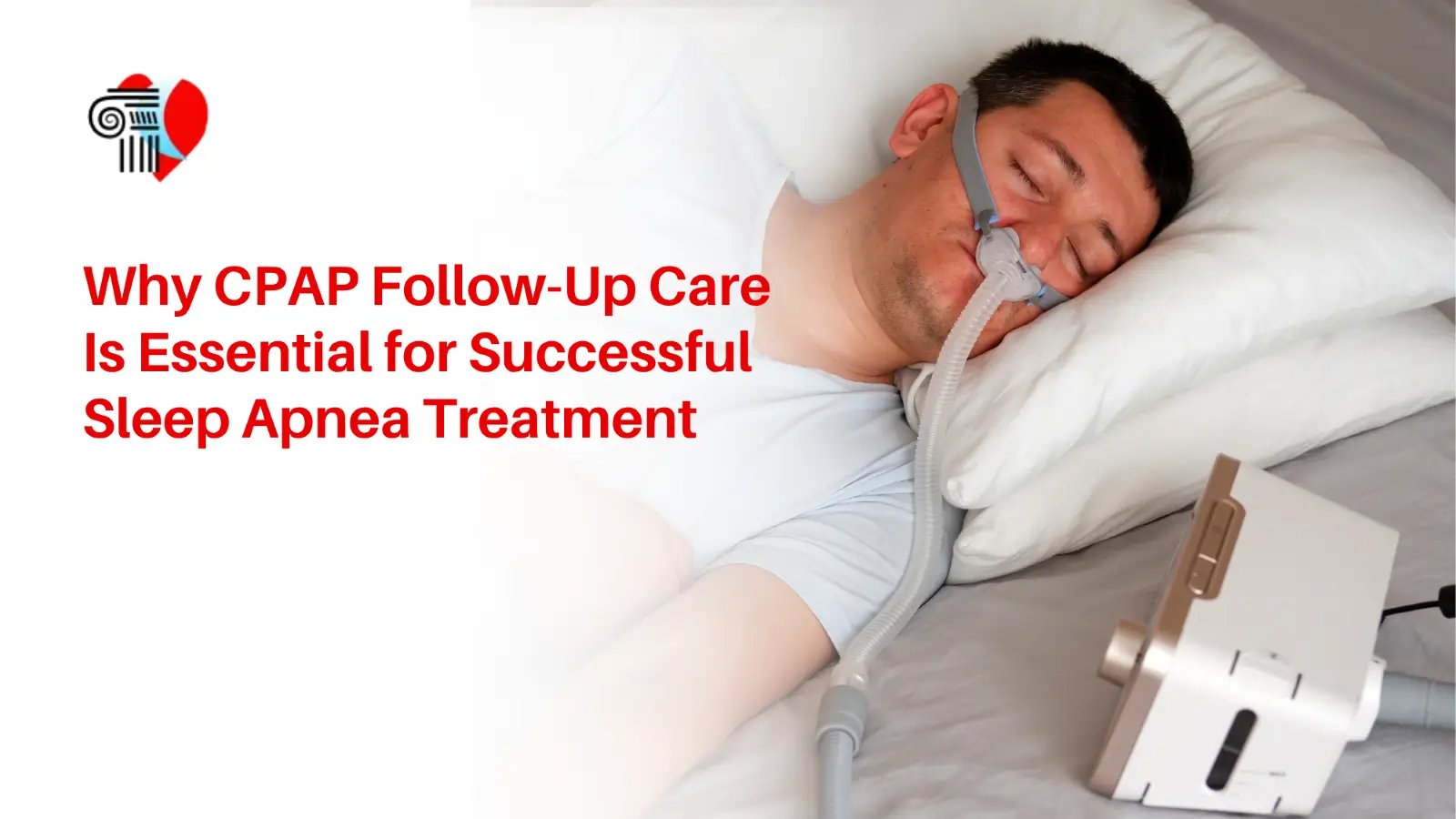
What Happens After You Start CPAP and Why Ongoing Support Matters
Getting a CPAP machine is an important milestone in treating obstructive sleep apnea. But receiving the equipment is not the end of treatment.
For many patients, the first few weeks and months are a learning period. You may need to adjust to wearing a mask, identify the right fit, manage dryness or air leaks, and determine whether your therapy is actually improving your sleep and daytime symptoms.
That is why CPAP follow-up care matters.
Regular follow-up allows your sleep care team to evaluate how well your treatment is working, address problems before they cause you to stop using the machine, and make adjustments when necessary. (For a breakdown of what to expect right at the start, read our detailed guide on your first 90 days with CPAP).
At Athens Sleep and Wellness Center, we view CPAP treatment as an ongoing process—not simply a prescription for a machine—which is why we offer dedicated CPAP management and support services.
Why CPAP Follow-Up Is So Important
CPAP can be highly effective for obstructive sleep apnea, but successful treatment depends on more than having the machine beside your bed.
Your sleep specialist needs to know:
- Are you using CPAP consistently?
- Is your mask comfortable?
- Are there significant air leaks?
- Is your sleep apnea adequately controlled?
- Are you still excessively sleepy during the day?
- Are you experiencing side effects?
- Are you having difficulty using the equipment?
Regular follow-up provides an opportunity to answer these questions and make sure your treatment remains appropriate.
The American Academy of Sleep Medicine recommends follow-up after initiating PAP therapy to assess treatment efficacy, adherence, and patient concerns.
The First Few Weeks Are an Adjustment Period
It is completely normal for CPAP to feel unfamiliar at first.
You are learning to sleep with a mask, tubing, and airflow that were not part of your previous routine. Some patients adjust quickly. Others need more time and support.
Common early challenges include:
- Mask discomfort
- Air leaks
- Dry mouth
- Nasal congestion
- Skin irritation
- Feeling claustrophobic
- Difficulty falling asleep
- Waking up because of the equipment
These problems do not necessarily mean CPAP is not right for you. Often, they can be addressed by adjusting the mask, equipment, humidification, or other aspects of treatment.
Follow-Up Helps Evaluate Whether Treatment Is Working
One of the most important reasons for follow-up is determining whether CPAP is actually controlling your sleep apnea.
Modern PAP machines can collect treatment information that your healthcare provider may review during follow-up.
Depending on the device, this information can provide insight into:
- Usage
- Mask leaks
- Breathing events
- Treatment effectiveness
Your provider can combine this information with how you are feeling to determine whether your therapy is working as expected. Feeling better is encouraging, but objective treatment data can provide additional information.
Your Mask Fit Can Make a Big Difference
A CPAP mask that does not fit properly can make treatment unnecessarily difficult.
A mask that is too loose may leak air. A mask that is too tight can cause discomfort or skin irritation. And the wrong mask style may simply not work well with the way you sleep or breathe.
During follow-up, your sleep care team can help identify whether your mask is contributing to treatment problems and determine whether a different size or style may be appropriate.
What If You Have Dry Mouth or Nasal Congestion?
Dryness and congestion are common complaints among some CPAP users.
Depending on the cause, your provider may recommend changes such as:
- Adjusting humidification
- Reviewing mask fit
- Addressing nasal congestion
- Considering a different mask configuration
- Reviewing other factors that may be affecting comfort
You should not have to simply tolerate persistent discomfort. Tell your sleep care team what you are experiencing so they can help identify an appropriate solution.
Follow-Up Can Help Prevent You From Giving Up on CPAP
One of the biggest barriers to successful CPAP treatment is frustration.
If the mask leaks, the machine feels uncomfortable, or you are not seeing immediate improvements, it can be tempting to stop using it. But abandoning treatment may leave your sleep apnea untreated.
Follow-up gives you an opportunity to troubleshoot these issues rather than giving up. Sometimes a relatively small adjustment can make CPAP much easier to use. If CPAP continues to fail despite all adjustments, providers may explore alternative sleep apnea treatments.
Consistency Matters
CPAP works while you are using it. For that reason, consistent use is an important part of successful treatment.
Your sleep specialist may encourage you to use CPAP whenever you sleep, including naps. The goal is not simply to meet a minimum number of hours. The goal is to treat your sleep apnea throughout your sleep period.
If you are struggling to use your machine consistently, tell your provider. There may be an underlying comfort, equipment, or treatment issue that can be addressed.
Follow-Up Can Be Important for Insurance Requirements
Follow-up is not only about clinical care. Certain insurance programs have specific requirements regarding continued coverage of PAP equipment.
For example, Medicare requires documentation of adherence and clinical benefit during the initial treatment period for continued coverage under applicable policies. Requirements can vary depending on your insurance plan, so ask your healthcare provider or equipment supplier what documentation and follow-up are required for you.
What Happens During a CPAP Follow-Up Visit?
Your follow-up appointment may include a discussion of:
Your Symptoms
Are you waking up feeling more rested? Has your daytime sleepiness improved? Are you still snoring? Are you waking frequently during the night?
Your CPAP Use
Your provider may review your device data to understand how consistently you are using your treatment.
Your Equipment
You may discuss mask fit, air leaks, tubing, humidification, comfort, and equipment maintenance.
Your Treatment Results
Your provider can assess whether your sleep apnea appears to be adequately controlled and determine whether any changes are needed, such as recommending an in-lab titration study if fine-tuning is required.
What If You Still Feel Tired After Starting CPAP?
Persistent daytime sleepiness does not necessarily mean CPAP has failed. There may be several reasons you continue to feel tired, including inconsistent CPAP use, mask leaks, inadequate treatment, insufficient sleep, another sleep disorder, medication effects, or other health conditions.
Your sleep specialist can evaluate the situation rather than assuming that CPAP is simply not working.
Can Your CPAP Treatment Change Over Time?
Yes. Your treatment needs can change as your health, weight, medications, sleep habits, and other circumstances change.
Your provider may determine that adjustments are appropriate based on your symptoms and treatment data. This is another reason ongoing follow-up matters. CPAP should not be viewed as a "set it and forget it" treatment.
When Should You Contact Your Sleep Specialist?
Do not wait for your next routine appointment if you are having significant problems with CPAP. Contact your sleep care team if:
- You cannot tolerate your mask
- Your mask repeatedly leaks
- You have persistent dryness or congestion
- You continue to experience significant daytime sleepiness
- You are waking frequently because of the equipment
- You are struggling to use CPAP consistently
- Your symptoms have returned
- You have questions about your equipment or treatment
The sooner a problem is addressed, the easier it may be to keep your treatment on track.
A Simple CPAP Self-Assessment
Ask yourself:
- Am I using CPAP every time I sleep?
- Is my mask comfortable?
- Do I regularly notice air leaks?
- Am I still tired during the day?
- Do I wake up feeling more rested than before treatment?
- Have I had a follow-up appointment since starting CPAP?
- Do I understand my CPAP results and treatment plan?
If you answered "no" to several of these questions, it may be time to speak with our sleep care team.
Frequently Asked Questions
1. How soon should I have a CPAP follow-up?
The timing depends on your individual treatment plan, but early follow-up is important to identify problems with comfort, adherence, and treatment effectiveness.
2. What if I am having trouble getting used to CPAP?
Tell your sleep specialist. Mask fit, pressure settings, humidification, and other factors may be adjusted to make treatment more comfortable.
3. Do I need follow-up even if I feel better?
Yes. Feeling better is a positive sign, but follow-up can help confirm that your treatment is being used consistently and effectively.
4. What happens if my CPAP data shows problems?
Your provider can review the information along with your symptoms and determine whether equipment or treatment adjustments are appropriate.
5. Can I stop CPAP if my symptoms improve?
Do not stop CPAP without discussing it with your sleep specialist. Improvement in symptoms does not necessarily mean that the underlying sleep apnea has resolved.
6. How often will I need CPAP follow-up?
There is no single schedule that works for everyone. Your follow-up frequency will depend on your treatment response, symptoms, equipment, and individual health needs.
The Bottom Line
Starting CPAP is an important step toward treating sleep apnea, but successful treatment requires ongoing care.
Follow-up allows your sleep specialist to evaluate treatment effectiveness, review device information, address mask and comfort problems, and make adjustments when necessary.
If CPAP is uncomfortable or you are struggling to use it consistently, do not give up on treatment on your own. Talk with your sleep care team. The right support can make the difference between simply owning a CPAP machine and successfully using it as part of your long-term sleep apnea treatment.
Get Ongoing CPAP Support in Athens, GA
At Athens Sleep and Wellness Center, we provide ongoing sleep care to help patients get the most from their CPAP treatment.
If you have recently started CPAP, are having difficulty adjusting to your equipment, or continue to experience symptoms despite treatment, our sleep team can evaluate your progress and help identify the next appropriate step.
Schedule your CPAP follow-up today and make sure your sleep apnea treatment is working as well as it should.