What Happens After a Sleep Study, How CPAP Treatment Begins, and What Patients Can Expect Along the Way
Getting a sleep study can feel like the end of a long process. You may have spent weeks or months dealing with loud snoring, restless sleep, morning headaches, daytime fatigue, or waking up feeling like you never truly rested.
But a sleep study is actually the beginning of your sleep treatment journey.
If the results show obstructive sleep apnea, the next steps can include reviewing your results, discussing treatment options, getting a CPAP or other positive airway pressure device, adjusting to treatment, and having follow-up care to make sure therapy is actually working.
Understanding this journey can make the process feel much less overwhelming.
Step 1: Recognizing That Something Is Wrong With Your Sleep
Sleep apnea does not always look like simply "not sleeping well."
A person may spend seven or eight hours in bed but still experience repeated disruptions in breathing throughout the night. Symptoms can include:
- Loud snoring
- Pauses in breathing noticed by a bed partner
- Gasping or choking during sleep
- Morning headaches
- Difficulty concentrating
- Excessive daytime sleepiness
Some people do not realize anything is wrong until someone else notices their breathing patterns during sleep. Others seek help because fatigue or sleepiness begins affecting work, driving, relationships, exercise, or everyday activities.
When these symptoms persist, a healthcare professional may recommend a sleep evaluation.
Step 2: The Sleep Evaluation
Before a sleep study, a sleep specialist typically looks at your symptoms, medical history, sleep patterns, medications, and other factors that could affect your sleep.
The goal is not simply to determine whether you snore. The evaluation helps determine whether your symptoms could be related to sleep apnea or another sleep disorder and whether additional testing is appropriate.
Depending on the situation, your provider may recommend a home sleep apnea test or an in-lab sleep study.
A home sleep apnea test is generally used for selected adults who have symptoms suggesting obstructive sleep apnea. An in-lab polysomnogram can provide a more comprehensive assessment of sleep and breathing and may be appropriate when other sleep disorders are suspected or when a home test does not provide enough information.
Step 3: Completing Your Sleep Study
A sleep study provides objective information about what happens while you sleep.
During an in-lab study, sensors may monitor brain activity, eye movements, heart rate, breathing, blood oxygen levels, body movements, and other signals. A home sleep apnea test typically collects fewer signals and focuses primarily on breathing-related information.
The study is designed to identify patterns that may help your provider determine whether sleep apnea is present and how significant it may be.
One important point is that a sleep study is not simply a test you "pass" or "fail." It provides information that your sleep specialist interprets alongside your symptoms and medical history.
Step 4: Reviewing Your Sleep Study Results
Once your study has been interpreted, your sleep specialist will discuss the results with you.
If obstructive sleep apnea is diagnosed, your provider will explain what the findings mean and discuss treatment options.
One commonly used measurement is the apnea-hypopnea index, or AHI. It represents the average number of apneas and hypopneas occurring per hour of sleep. However, treatment decisions should not be based on a single number alone.
Your symptoms, overall health, sleep study findings, and individual circumstances all matter when determining the appropriate treatment approach.
Step 5: Understanding Your CPAP Recommendation
If CPAP is recommended, you may wonder why you need a machine when you are already sleeping every night.
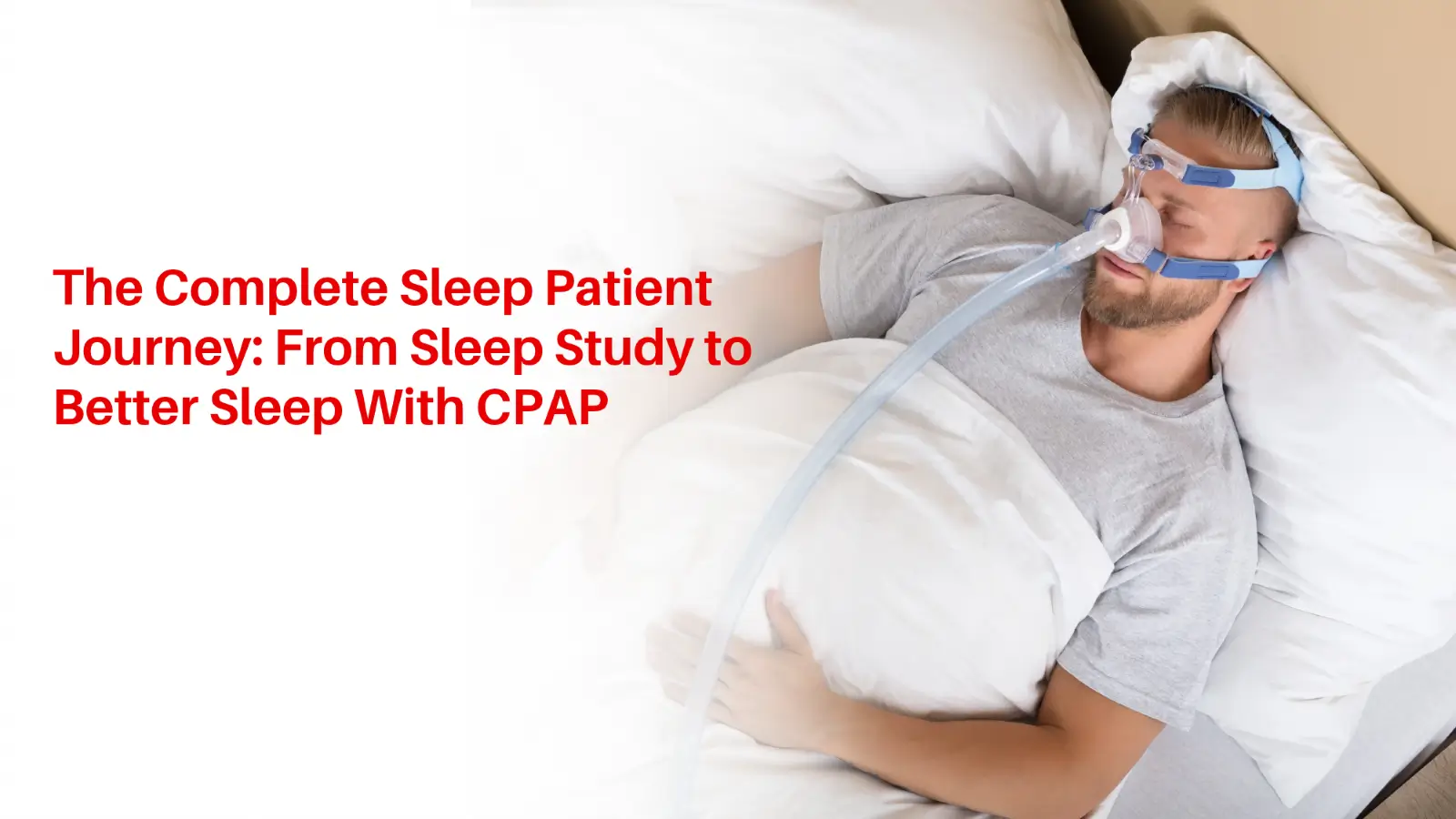
The answer is that sleep apnea is related to repeated narrowing or blockage of the upper airway during sleep. CPAP, which stands for continuous positive airway pressure, uses a device to deliver pressurized air through a mask. The pressure helps keep the airway open while you sleep.
The National Heart, Lung, and Blood Institute's information on CPAP explains that CPAP is a common treatment for obstructive sleep apnea and works by providing continuous air pressure to help prevent the airway from closing.
For many patients, CPAP can reduce breathing interruptions and improve sleep quality when it is used consistently and correctly.
Step 6: Getting Your CPAP Equipment
Once treatment is prescribed, the next step is obtaining the appropriate equipment. A typical CPAP setup may include:
- The CPAP device
- A mask
- Tubing
- Filters
- A humidifier, depending on the device
- Other replacement supplies
Choosing the right mask can be especially important. A mask that does not fit properly may leak air, feel uncomfortable, or make it harder to sleep. There are different mask styles, and the best choice depends on factors such as how you breathe at night, whether you breathe through your mouth, your preferred sleeping position, and comfort.
Step 7: Your First Nights With CPAP
The first few nights can feel unfamiliar. You may notice the sensation of airflow, the presence of the mask, or sounds from the equipment that you were not accustomed to before. This does not necessarily mean CPAP is not working for you. Adjustment can take time.
Some patients experience issues such as:
- Dry mouth: This may occur when air escapes through the mouth or when the airway becomes dry.
- Nasal congestion: Nasal symptoms can make wearing a CPAP mask more difficult.
- Mask leaks: A poor fit or incorrect adjustment can allow air to escape.
- Feeling uncomfortable with the mask: Some people need time to become accustomed to sleeping with a mask.
- Difficulty falling asleep: The equipment itself can initially feel distracting.
These issues should not simply be ignored. Mask fit, humidification, pressure settings, and other aspects of therapy can often be evaluated and adjusted with professional guidance.
Step 8: Learning How to Use CPAP Correctly
Getting the machine is only one part of successful treatment. Patients need to understand how to use and care for their equipment.
Your sleep care team can help you understand how to:
- Put on and remove the mask correctly
- Clean your equipment
- Check for mask leaks
- Replace appropriate supplies
- Travel with your CPAP
- Troubleshoot common problems
- Understand your therapy data
The NHLBI's sleep apnea treatment guidance emphasizes the importance of using prescribed sleep apnea treatment as directed.
Step 9: The First Few Weeks Are About Adjustment
The first weeks are often the most important period for identifying problems. You may notice improvements quickly. Some people report feeling more rested or less sleepy during the day. Others need more time.
If you are struggling with CPAP, that does not mean you have failed at treatment. It may mean that something about the setup needs attention.
Your mask may need adjustment. You may need a different mask style. Nasal symptoms may need to be addressed. Your pressure settings may need evaluation by your sleep care team. The important thing is to communicate rather than abandoning therapy.
Step 10: CPAP Follow Up Matters
CPAP treatment does not end when you receive the machine. Follow-up allows your sleep specialist to evaluate how you are responding to therapy.
Depending on the device and care setting, treatment data may provide information about usage, mask leaks, and residual breathing events. Your provider can use this information along with your symptoms to determine whether treatment is working effectively.
If you continue to experience significant daytime sleepiness, frequent awakenings, discomfort, or other symptoms despite using CPAP, tell your sleep specialist. Persistent symptoms deserve evaluation rather than simply being accepted as part of living with sleep apnea.
Step 11: Building CPAP Into Your Normal Routine
Eventually, CPAP should become part of your regular sleep routine rather than something you think about every night. That means using it consistently whenever you sleep, including naps when applicable.
Travel should not automatically mean taking a break from treatment. Planning ahead can make it easier to continue therapy when you are away from home.
The goal is not simply to accumulate hours on a machine. The goal is to consistently treat sleep apnea so that your sleep and daytime functioning can improve.
CPAP Compliance vs. Successful Treatment
Patients sometimes hear the word "compliance" and assume it means simply wearing the mask for a certain number of hours. Insurance requirements can include specific usage thresholds. For example, Medicare coverage requirements for continued use of certain PAP equipment include documented usage criteria during an initial period.
However, insurance compliance and optimal clinical use are not necessarily the same thing. From a treatment perspective, the goal is generally to use prescribed PAP therapy whenever you sleep.
Your sleep specialist can explain the specific requirements that apply to your equipment and insurance coverage.
What If CPAP Is Not Working for You?
CPAP is highly effective for many people, but not every patient has a smooth experience immediately. If you are having difficulty, do not assume your only choices are to tolerate discomfort or stop treatment.
Your sleep specialist can evaluate potential problems. Depending on the situation, adjustments may involve the mask, humidification, pressure settings, treatment approach, or another aspect of your care.
There are also other treatment options for selected patients with obstructive sleep apnea. These can include oral appliance therapy, positional approaches, weight management when appropriate, and other interventions depending on the individual's diagnosis and circumstances. The right treatment is the one that appropriately addresses the sleep disorder and can be used consistently.
How Long Does It Take to Feel Better With CPAP?
There is no single timeline that applies to everyone. Some patients notice improvements in sleepiness or sleep quality relatively quickly. Others require more time to adjust to treatment or may have another factor contributing to persistent symptoms.
Sleep improvement also depends on more than the machine itself. If you have insufficient sleep, irregular sleep schedules, another sleep disorder, medication effects, or other health factors, those issues may need to be considered. That is why follow-up remains important even after you start feeling better.
Your Sleep Journey Does Not End With the Machine
One of the biggest misconceptions about CPAP is that receiving the device is the final step. It is not.
The complete sleep care journey looks more like this:
Symptoms → Sleep evaluation → Sleep study → Diagnosis → Treatment plan → CPAP setup → Adjustment → Follow-up → Ongoing successful treatment
Each step matters. A sleep study helps identify the problem. A treatment plan addresses the problem. CPAP provides therapy when it is appropriate. Follow-up helps make sure the therapy continues to work. And ongoing support helps turn treatment into a sustainable part of your life.
Self Assessment: How Is Your CPAP Journey Going?
Ask yourself:
- Do you still feel excessively sleepy during the day despite using CPAP?
- Are you consistently using your CPAP whenever you sleep?
- Does your mask feel comfortable throughout the night?
- Are you experiencing frequent mask leaks?
- Do you wake up with a dry mouth or significant nasal discomfort?
- Are you removing your mask during sleep without realizing it?
- Have you missed recommended CPAP follow-up?
- Do you still feel that your sleep is not restorative?
If you answered yes to several of these questions, discuss your experience with your sleep specialist. Small changes to your treatment setup can sometimes make a meaningful difference in comfort and consistency.
Frequently Asked Questions
1. What happens after a sleep study?
Your sleep study is interpreted by a qualified healthcare professional. Your provider then reviews the findings with you and determines whether a sleep disorder is present and what treatment may be appropriate.
2. How soon do you get CPAP after a sleep study?
The timeline varies depending on the sleep study results, prescription process, equipment availability, insurance requirements, and whether additional evaluation or testing is needed.
3. Do I have to use CPAP every night?
If CPAP has been prescribed for your sleep apnea, consistent use is important. The clinical goal is generally to use it whenever you sleep, including naps.
4. What if my CPAP mask is uncomfortable?
Tell your sleep care team. Different mask styles and adjustments may improve comfort and reduce leaks. You should not assume that discomfort is something you simply have to live with.
5. Can CPAP cure sleep apnea?
CPAP treats obstructive sleep apnea while it is being used, but it generally does not permanently eliminate the underlying tendency for the airway to become blocked. Treatment should be continued as prescribed unless your healthcare provider recommends a change.
6. What if I am still tired after starting CPAP?
Persistent daytime sleepiness should be discussed with your sleep specialist. Your provider may review CPAP usage, mask leaks, residual breathing events, sleep duration, medications, and other possible causes.
7. How often should I have CPAP follow-up?
Follow-up timing varies based on your treatment needs, response to therapy, equipment, and insurance requirements. Early follow-up can be particularly helpful when you are having difficulty adjusting to CPAP.
The Bottom Line
A sleep study is not the destination. It is the beginning of a journey toward better sleep.
From diagnosis and treatment selection to getting your CPAP equipment, adjusting to the mask, monitoring therapy, and attending follow-up appointments, every step contributes to successful sleep apnea management.
If CPAP has been recommended, give yourself time to adjust and communicate with your sleep care team when something is not working. Better sleep is not just about getting a machine. It is about getting the right diagnosis, the right treatment, the right support, and a plan you can consistently follow.
Ready to Take the Next Step Toward Better Sleep?
If you are experiencing persistent snoring, daytime sleepiness, disrupted sleep, or difficulty adjusting to CPAP, a comprehensive sleep evaluation can help you understand what is happening and what comes next.
Athens Sleep and Wellness Center provides personalized sleep evaluation, diagnosis, treatment, and follow-up care to help patients move from better diagnosis to better sleep.
Contact us today to schedule your sleep consultation.