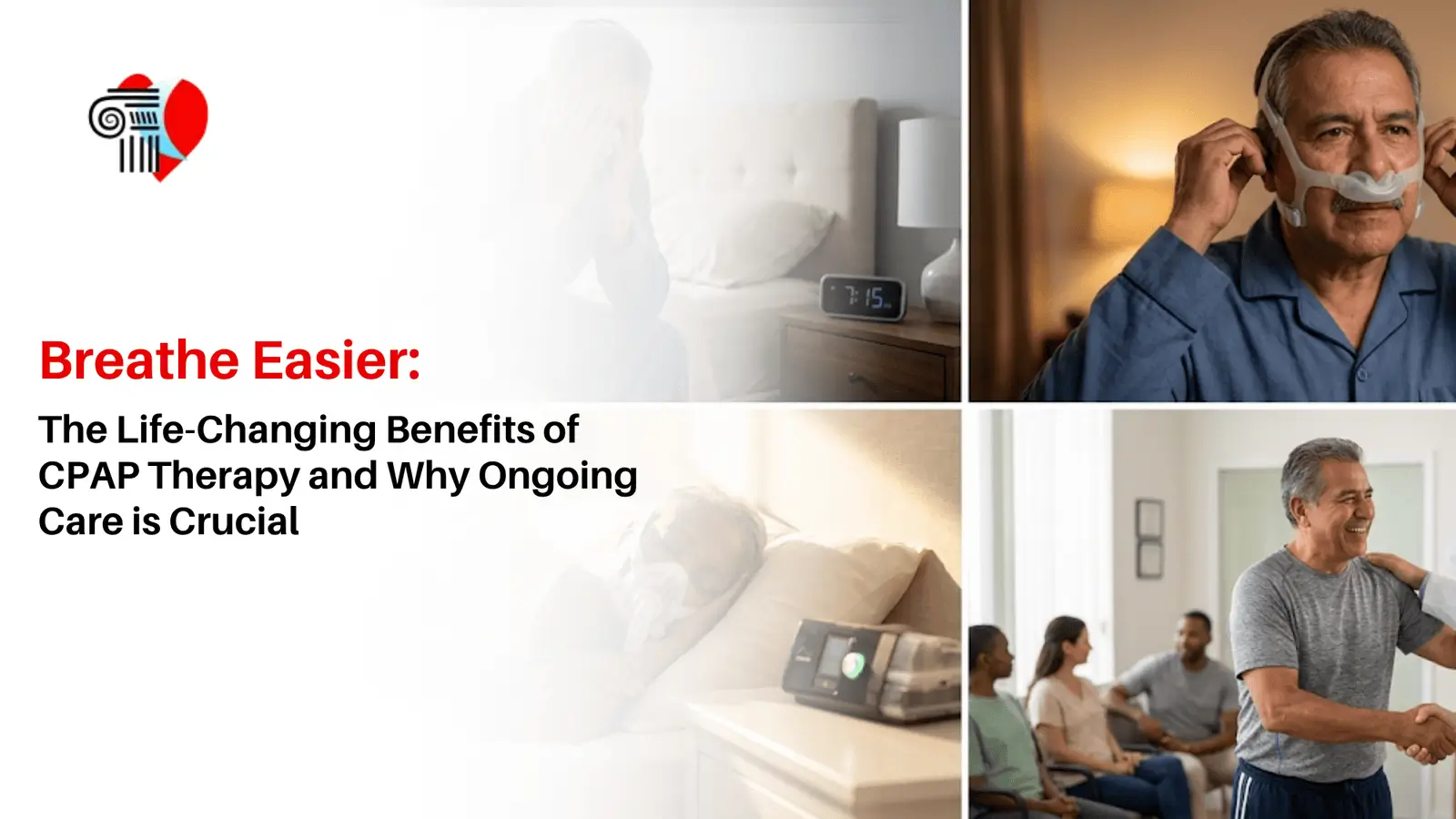
If you are struggling with poor sleep, snoring, daytime fatigue, or waking up exhausted, it may be more than just a bad night’s rest. Obstructive Sleep Apnea (OSA) is a serious, hidden epidemic. It doesn't just drain your daily energy; it severely threatens your long-term cardiovascular and metabolic health.
As a board-certified cardiologist and sleep medicine specialist with over 45 years of experience, I have seen firsthand how brain health, mood, and heart function are intimately connected to the quality of your sleep.
At the Athens Sleep and Wellness Center, managed alongside the Athens Heart Center, we believe that prescribing a Continuous Positive Airway Pressure (CPAP) machine is only the first step. True success requires structured, expert follow-up to ensure your therapy is comfortable, highly effective, and actively protecting your cardiovascular system.
The True Value of CPAP Therapy: A Cost-Effective Lifesaver
Many patients wonder if the time, effort, and adjustment period required to adapt to CPAP therapy are truly worth it. The clinical and economic data say unequivocally: yes.
Undiagnosed and untreated sleep apnea places a massive financial and physical burden on patients. In the United States alone, untreated OSA costs an estimated $150 billion annually due to increased emergency room visits and treatments for preventable downstream cardiovascular diseases.
However, treating OSA with a CPAP is one of the most cost-effective interventions in modern medicine. When analyzing the Incremental Cost-Effectiveness Ratio (ICER) per Quality-Adjusted Life Year (QALY), the financial metrics reveal astonishing value:
| Metric Category |
Estimated Value / Impact |
| Standard Cost per QALY (U.S.) |
~$3,400 |
| Societal Cost per QALY |
$310 (Accounting for reduced work absenteeism and improved productivity) |
| Annual Accident Prevention |
Prevents an estimated 567,000 motor vehicle accidents per year |
Beyond the economics, CPAP therapy dramatically improves your health-related quality of life, eliminates daytime sleepiness, lowers mean HbA1c (Hemoglobin A1c) levels for diabetics, and reduces premature mortality in severe cases. It functions as a powerful, non-invasive "pneumatic splint" to protect your heart from the strain of chronic, nightly oxygen deprivation.
Our Approach: Remote Patient Monitoring and Annual Clinical Evaluations
A CPAP machine cannot protect your heart if it sits unused in a closet. To guarantee the best long-term health outcomes, the Athens Sleep and Wellness Center utilizes a two-pronged, proactive approach:
- Monthly Remote Patient Monitoring (RPM): Modern CPAP devices are equipped with secure cellular technology. This allows our clinical team to monitor your nightly usage patterns, mask leaks, and your tracking Apnea-Hypopnea Index (AHI). By evaluating this data monthly, we can preemptively spot mechanical issues, adjust your pressure settings remotely, and provide timely telehealth coaching before minor discomforts turn into reasons to abandon therapy.
- Annual CPAP Efficacy Checks: Your body changes over time, and so do the pressure requirements of your airway. Weight fluctuations, age, and changes in routine cardiovascular medications can all impact how well your device performs. We recommend an in-clinic appointment at least once a year to physically inspect your equipment, evaluate your clinical symptoms, and ensure your settings are fully optimizing your biological health.
Do You Need a CPAP Clinic Appointment? 5 Self-Assessment Questions
If you currently use a CPAP machine, ask yourself the following five questions. If you answer "yes" to any of them, it is time to call our clinic for an efficacy check:
- Are you still snoring, waking up gasping for air, or experiencing morning headaches despite using your CPAP? This often indicates that your pressure settings are too low to keep your airway open.
- Do you wake up feeling bloated, gassy, or frequently belching? This is a condition called aerophagia, meaning you are swallowing air because your CPAP pressure may be set too high.
- Are you experiencing severe dry mouth, nasal irritation, or frequent nosebleeds? Your humidifier and heated tubing settings likely need adjustment, or your mask style may be leaking excessively.
- Have you recently gained or lost 10 pounds or more? Significant weight changes directly alter the physical landscape of your airway and the amount of pressure required to keep it stable.
- Do you struggle with claustrophobia or difficulty exhaling against the incoming air? Our clinical team can adjust your pressure relief settings (such as EPR) or transition you to an auto-adjusting device for enhanced comfort.
Top 10 Frequently Asked Questions About Sleep Apnea and CPAP
1. What exactly is Obstructive Sleep Apnea (OSA)?
OSA occurs when the muscles in the back of your throat relax excessively during sleep, causing the soft tissue of your airway to collapse. This completely blocks air from entering your lungs, triggering sudden drops in blood oxygen levels and forcing your brain to constantly wake you up to breathe.
2. What happens if I leave my sleep apnea untreated?
Untreated OSA triggers a chronic systemic stress response that spikes blood pressure and heart rate. Over time, this drastically increases your absolute risk for hypertension, dangerous heart arrhythmias (like Atrial Fibrillation), heart attacks, strokes, insulin resistance, and type 2 diabetes.
3. Why should a cardiologist manage my sleep apnea?
The brain, heart, and sleep architecture are intrinsically linked. Because sleep apnea places immense structural strain on the cardiovascular system, having a dual-certified specialist in both cardiology and sleep medicine ensures that your treatment targets heart protection while optimizing your daily rest.
4. How does CPAP therapy fix sleep apnea?
CPAP works by delivering a continuous, calculated stream of pressurized air through a specialized mask. This air acts as a constant "pneumatic splint," pushing gently against the walls of your throat to prevent the airway from collapsing while you sleep.
5. What is the "right" CPAP pressure?
There is no universal correct pressure; it is entirely customized to your specific anatomy and OSA severity. Most commercial machines operate dynamically between 4 cm H₂O and 20 cm H₂O, with the average person requiring between 8 cm H₂O and 10 cm H₂O.
6. What is "CPAP Rainout" and how do I stop it?
Rainout occurs when the warm, humidified air from your CPAP cools too quickly as it travels through your tubing, condensing into liquid water that splashes onto your face. This can be completely prevented by using heated tubing, which maintains a steady, controlled temperature (typically between 60°F and 86°F) from the machine directly to your mask.
7. How should I clean my CPAP machine?
Despite heavy marketing for expensive, unapproved ozone and UV light cleaners—which can actually degrade the internal components of your machine and expose you to toxic gases—the best and safest method is simple. Wash your equipment weekly with warm water and a mild, non-scented soap (like baby shampoo or plain Ivory soap). Regularly wipe the mask cushion daily to remove facial oils.
8. What is Complex Sleep Apnea Syndrome (CompSAS)?
In some patients, treating obstructive events with standard CPAP inadvertently triggers central sleep apneas, a condition where the brain temporarily fails to send the neurological signal to breathe. This is known as Complex Sleep Apnea and requires expert clinical management, specialized pressure adjustments, or advanced bi-level (BiPAP) therapy.
9. Can CPAP compliance affect my health insurance coverage?
Yes. Medicare and most private insurance payors require proof of compliance to maintain coverage. Generally, you must use the CPAP machine for at least 4 hours a night on 70% of nights during a consecutive 30-day period within your first 90 days of treatment. Our remote monitoring team helps you monitor and hit these targets easily.
10. What if I simply cannot tolerate my CPAP mask?
Do not give up. Poor mask fit and air pressure discomfort are the leading reasons people abandon therapy. Contact our sleep clinic immediately; we can adjust your comfort pressures, change your mask architecture (nasal pillows vs. full-face), adjust humidity, or explore alternative treatments to ensure you stay protected.
Expert Care in the Athens Metro Area
If you live in Athens, GA, or the surrounding metro area and are dissatisfied or struggling with your current CPAP treatment, you do not have to navigate it alone. At the Athens Sleep and Wellness Center, located conveniently inside the Athens Heart Center on Prince Avenue, we specialize in rescuing failed CPAP therapies.
Our AASM-accredited clinic offers comprehensive testing, personalized mask-fitting, and continuous remote monitoring managed by board-certified specialists.
Don't let poor sleep damage your heart. Call our team today to schedule your comprehensive evaluation.
📍 Location: 2005 Prince Ave, Athens, GA 30606
📞 Phone: (706) 613-6990
🌐 Online: ahcsleepcenter.com