
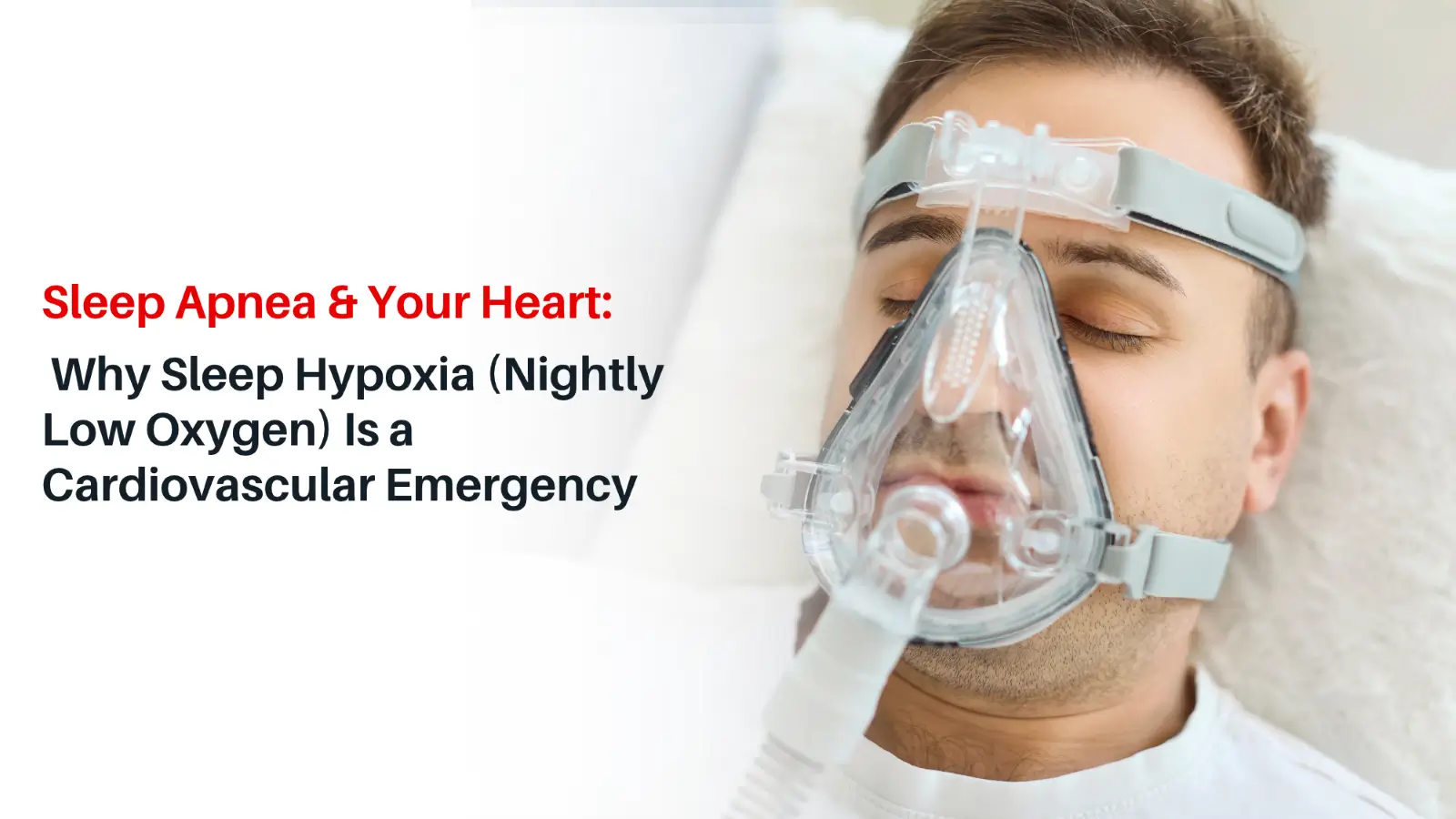
Sleep Apnea & Your Heart: Why Sleep Hypoxia (Nightly Low Oxygen) Is a Cardiovascular Emergency
Written & Clinically Reviewed By: Subodh K. Agrawal, MD, FACC
Credentials: Dual Board-Certified in Cardiovascular Disease & Sleep Medicine
Published By: Athens Sleep and Wellness Center | Athens Heart Center
Location: 2005 Prince Ave, Athens, GA 30606 | Phone: (706) 208-9700
Last Clinically Reviewed & Updated: November 2026
For decades, obstructive sleep apnea (OSA) was viewed primarily as a minor quality-of-life issue marked by loud snoring, morning fatigue, and afternoon brain fog. Today, leading cardiologists and sleep specialists recognize it through a much more urgent lens: a systemic vascular and metabolic threat driven by nocturnal sleep hypoxia, which refers to repeated drops in blood oxygen saturation during sleep.
Landmark clinical studies published in the journal SLEEP and official clinical statements from the American Heart Association (AHA) demonstrate that standard sleep diagnostics often fail to capture true cardiovascular risk. Measuring only how many times you stop breathing (the Apnea-Hypopnea Index, or AHI) misses the full picture. Instead, Nocturnal Hypoxic Burden (NHB), which measures the actual depth, duration, and frequency of oxygen deprivation during sleep, serves as the primary driver of heart attacks, strokes, heart failure, and severe high blood pressure.
At Athens Sleep and Wellness and Athens Heart Center, serving Athens-Clarke County, Oconee County, and surrounding Northeast Georgia communities, Dr. Subodh Agrawal provides dual-board-certified expertise connecting heart health & sleep medicine. By eliminating nocturnal hypoxia through advanced therapies, including modern cpap therapy, targeted nocturnal oxygen, and mask-free Inspire® therapy, we work to preserve vascular function and improve long-term survival.
What Is Sleep Hypoxia? Understanding Nocturnal Oxygen Desaturation
Quick Summary: Sleep hypoxia is a clinical condition where partial or complete upper airway collapse repeatedly restricts oxygen flow to the lungs during sleep, causing peripheral blood oxygen saturation (SpO2) to plummet beneath healthy baseline levels (typically ≥ 95%), often dropping below 90%.
Airway Collapse → Desaturation Nadir (<90%) → Chemoreceptor Activation → Sympathetic Surge → Arterial Vasoconstriction
When breathing pauses, falling blood oxygen alerts peripheral chemoreceptors to signal the autonomic nervous system that the body is suffocating. The brain responds with an immediate surge of epinephrine and norepinephrine (adrenaline). This sudden autonomic jolt constricts blood vessels, spikes heart rate, and abruptly elevates systemic blood pressure. This stress response can repeat dozens or hundreds of times every night.
The Cumulative Cardiovascular Cascade: How Low Oxygen Damages the Heart
Nightly oxygen deprivation puts severe, compounding physical strain on your entire vascular tree:
- Endothelial Dysfunction & Atherosclerosis: Repeated cycles of desaturation and re-oxygenation generate surges of reactive oxygen species (ROS). This oxidative stress damages the vascular endothelium, impairs nitric oxide production, and accelerates arterial plaque buildup.
- Loss of Blood Pressure "Dipping": A healthy cardiovascular system experiences a 10% to 20% blood pressure decline during sleep. Sleep hypoxia prevents this rest period, resulting in a "non-dipping" or "reverse-dipping" blood pressure profile that drives treatment-resistant hypertension.
- Electrical Remodeling & Arrhythmias: Elevated adrenaline combined with negative intrathoracic pressure stretches the heart's upper chambers. This mechanical and ischemic strain triggers electrical instability, serving as a primary driver of recurrent Atrial Fibrillation (Afib).
- Heart Failure Progression: Chronic hypoxia forces the pulmonary vascular bed to constrict (hypoxic pulmonary vasoconstriction), raising right ventricular afterload and accelerating both systolic and diastolic heart failure.
Why Standard Sleep Studies Miss Heart Risks: AHI vs. Hypoxic Burden
Historically, sleep studies have graded sleep apnea severity using the Apnea-Hypopnea Index (AHI), which tallies the number of breathing pauses per hour lasting 10 seconds or longer. However, the AHI has a major clinical limitation: it treats every respiratory event as equal.
| Diagnostic Metric | Measurement Focus | Clinical Blind Spot |
|---|---|---|
| Traditional AHI | Number of respiratory pauses per hour | A 10-second minor pause counts identical to a 60-second drop to 70% SpO2. |
| Nocturnal Hypoxic Burden (NHB) | Area under the desaturation curve (%·min/hr) | Quantifies exact cumulative biological damage and ischemic strain on the heart. |
| Sleep Regularity Index (SRI) | Consistency of sleep/wake timing over 24-hour cycles | Captures circadian disruption and autonomic strain missed by total hours slept. |
Many patients with "mild" or "moderate" AHI scores often experience severe, prolonged drops in blood oxygen saturation that standard diagnostic summaries obscure. By calculating total Nocturnal Hypoxic Burden during a comprehensive sleep study, our clinical team determines your true vascular risk profile and targets treatment directly at the underlying physiological deficit.
Targeted Therapies to Eliminate Sleep Hypoxia
Eliminating sleep hypoxia requires precise diagnostic localization and individualized therapy. When comparing sleep apnea treatment options, we utilize three proven clinical pathways to restore nocturnal oxygenation and eliminate cardiovascular strain:
1. Modern CPAP Therapy (Clinically Proven Survival Benefit)
Continuous Positive Airway Pressure (CPAP) remains the definitive frontline treatment for airway collapsibility. Contemporary devices feature whisper-quiet motors, heated humidification, adaptive pressure algorithms, and cloud-based compliance tracking.
Clinical Evidence: A comprehensive international meta-analysis evaluating over one million sleep apnea patients revealed that regular CPAP usage was associated with up to a 55% reduction in cardiovascular mortality and a 37% decrease in all-cause mortality. The data demonstrated a distinct dose-response curve: every additional hour of nightly compliance delivers measurable protection against fatal cardiac events. Explore the benefits of cpap therapy to see how ongoing care protects your health.
2. Precision Supplemental Nocturnal Oxygen
For individuals with complex cardiorespiratory overlap, such as sleep apnea co-occurring with chronic obstructive pulmonary disease (COPD), obesity hypoventilation, or heart failure, airway stabilization alone may not fully correct oxygen desaturation. In these cases, we integrate precision nocturnal oxygen therapy to prevent critical desaturations, especially during rapid eye movement (REM) sleep when hypoxic drops are typically deepest.
3. Inspire® Upper Airway Stimulation (Mask-Free Therapy)
For patients with moderate-to-severe obstructive sleep apnea who struggle with CPAP compliance, Inspire® therapy offers an FDA-approved, mask-free alternative. Implanted during a brief outpatient procedure, Inspire monitors respiratory effort and delivers mild stimulation to the hypoglossal nerve with each breath. This action moves the tongue base and palate forward, keeping the airway unobstructed. Clinical registries confirm that Inspire effectively reduces both AHI and nocturnal hypoxic burden, providing sustained cardiovascular protection for CPAP-intolerant individuals.
The Value of Dual Board-Certified Care
Treating sleep apnea without assessing heart health leaves significant vascular risks unaddressed. Similarly, managing hypertension, coronary disease, or arrhythmias without treating underlying nocturnal hypoxia leaves a major driver of cardiac damage active every single night.
As a physician dual board-certified in Cardiovascular Disease and Sleep Medicine, Dr. Subodh Agrawal bridges this gap. At Athens Sleep and Wellness and Athens Heart Center, diagnostic data—from home sleep testing to echocardiography and cardiac rhythm monitoring—are evaluated as an integrated system to ensure your airway and your heart receive comprehensive care. Learn more about finding the best sleep apnea doctor near you to guide your treatment choices.
Frequently Asked Questions (FAQs)
1. What is sleep hypoxia, and how does it differ from standard snoring?
Snoring is the sound of turbulent air moving through a narrowed upper airway. Sleep hypoxia occurs when that narrowing partially or fully blocks airflow, causing blood oxygen levels (SpO2) to fall below safe physiological thresholds (typically under 90%). Snoring is a sound; sleep hypoxia is an active, recurring cardiovascular stressor.
2. What symptoms indicate that my oxygen levels are dropping while I sleep?
Common symptoms include morning headaches, waking up gasping or choking, dry mouth, excessive daytime sleepiness, and waking up repeatedly to urinate (nocturia). However, many individuals with severe nocturnal hypoxia experience little to no daytime fatigue. In these cases, objective cardiovascular signs, such as resistant high blood pressure, new-onset atrial fibrillation, or elevated resting heart rate, often serve as the primary indicators.
3. Why should I see a cardiologist who is also board-certified in sleep medicine?
Cardiovascular disease and sleep apnea share overlapping biological mechanisms. A dual board-certified cardiologist and sleep specialist evaluates how nightly oxygen drops affect your coronary blood flow, vascular stiffness, and cardiac rhythms. This allows for an integrated management plan where airway therapies, blood pressure goals, and cardiac medications are synchronized under one specialist.
4. My previous sleep study showed "mild" sleep apnea. Could I still have severe hypoxia?
Yes. The standard Apnea-Hypopnea Index (AHI) tallies only the number of breathing events per hour; it does not measure how deep or sustained your oxygen drops are. An individual with an AHI of 8 may have oxygen levels dropping into the 70% range for extended periods, creating severe Nocturnal Hypoxic Burden. A specialist trained in sleep cardiology reviews your raw oximetry channels to ensure high-risk hypoxia is identified and addressed.
5. Can eliminating sleep hypoxia lower my blood pressure?
Yes. Sleep hypoxia triggers surges of adrenaline that persist throughout waking hours, driving up systemic blood pressure. Multiple randomized trials show that eliminating nocturnal hypoxia with treatments like CPAP or Inspire significantly reduces both daytime and nighttime blood pressure, particularly in patients with resistant hypertension requiring three or more medications.
6. How does treating nocturnal hypoxia benefit patients with Atrial Fibrillation (Afib)?
Nocturnal hypoxia causes atrial stretching, inflammation, and autonomic fluctuations that provoke abnormal heart rhythms. Patients with untreated sleep hypoxia experience significantly higher rates of Afib recurrence following antiarrhythmic therapy, cardioversion, or catheter ablation. Effective airway treatment stabilizes the heart's electrical system and substantially reduces the risk of recurrent episodes.
7. What does clinical research show about CPAP use and overall survival?
A major meta-analysis spanning more than one million patients demonstrated that consistent CPAP adherence is linked to a 55% reduction in cardiovascular mortality and a 37% reduction in all-cause mortality. The protective effect is directly related to nightly use, confirming that preventing oxygen deprivation lowers long-term mortality risk.
8. What alternative treatments are available if I cannot tolerate a CPAP machine?
CPAP is not the only effective option. Modern alternatives include Inspire upper airway stimulation (an implanted device that keeps the airway clear without a mask), custom-fabricated oral mandibular advancement devices (MAD), and targeted nighttime oxygen supplementation. A comprehensive cardiopulmonary sleep evaluation identifies the best modality for your specific airway anatomy.
9. Who is a candidate for Inspire upper airway stimulation therapy?
Inspire is FDA-approved for adults diagnosed with moderate-to-severe obstructive sleep apnea who cannot tolerate or achieve adequate clinical benefit from CPAP. Candidates typically have a body mass index (BMI) within safety guidelines and must undergo an outpatient airway inspection (Drug-Induced Sleep Endoscopy) to verify that the airway collapses in a pattern that responds well to hypoglossal nerve stimulation.
10. How do I schedule a comprehensive sleep hypoxia evaluation in Northeast Georgia?
If you snore, wake feeling unrefreshed, take multiple medications for blood pressure, or manage a diagnosed heart condition, you can arrange an evaluation directly at Athens Sleep and Wellness and Athens Heart Center. We provide convenient home sleep study in athens ga options and direct cardiovascular integration at our main office serving Athens-Clarke County, Oconee County, and surrounding communities.
Schedule Your Cardiopulmonary Sleep Evaluation
Do not let untreated sleep hypoxia go undetected. Protect your vascular health and improve your overall sleep quality by working with an integrated specialty team.
Practice: Athens Sleep and Wellness / Athens Heart Center & Specialty Clinics
Physician: Subodh Agrawal, MD, FACC (Dual Board-Certified in Cardiology & Sleep Medicine)
Address: 2005 Prince Avenue, Athens, GA 30606
Phone: (706) 208-9700
Online: AthensHeartCenter.com | ahcsleepcenter.com
References & Clinical Guidelines
- American Heart Association (AHA). Obstructive Sleep Apnea and Cardiovascular Disease: A Scientific Statement From the American Heart Association. Circulation. Accessible via: ahajournals.org.
- Azarbarzin, A., et al. (2019). The hypoxic burden of sleep apnoea predicts cardiovascular mortality. European Heart Journal, 40(14), 1149–1157.
- American Academy of Sleep Medicine (AASM). Clinical Practice Guideline for Diagnostic Testing for Adult Obstructive Sleep Apnea. Journal of Clinical Sleep Medicine. Accessible via: aasm.org.
- National Heart, Lung, and Blood Institute (NHLBI). Sleep Apnea and Cardiovascular Risk Guidelines. U.S. Department of Health and Human Services. Accessible via: nhlbi.nih.gov.